ISR Lessons

What Your Child Will Learn In ISR Lessons

Discover the nurturing guidance at our cozy indoor facility, where your child's safety is my top priority. ISR’s unique results are achieved through fully customized, safe and effective, one-on-one lessons with only your child and myself in the water. What your child will learn, and the way he or she will learn it, is what makes ISR so different from traditional swimming lessons. Always putting safety first, ISR emphasizes competence, which leads to confidence, and provides the foundation for a lifetime of enjoyment in and around the water. I am patient, and determined to see your little one succeed.

Registration Process

  1. Initial Clearance and Online Registration


    - Complete initial clearance through the national ISR office online.


    - Fill out registration forms and pay the $105 fee using the unique URL provided.

  2. Approval and Scheduling


    - Wait for confirmation from ISR. Upon approval, your child will be scheduled.

  3. Start Date Confirmation and Information Packet


    - Receive an email with your child's start date and time along with an informational registration packet.

  4. Pre-Lesson Communication


    - Before lessons, get an email from your instructor with directions, BUDS sheets, ISR Policies, and a welcome letter with tips.
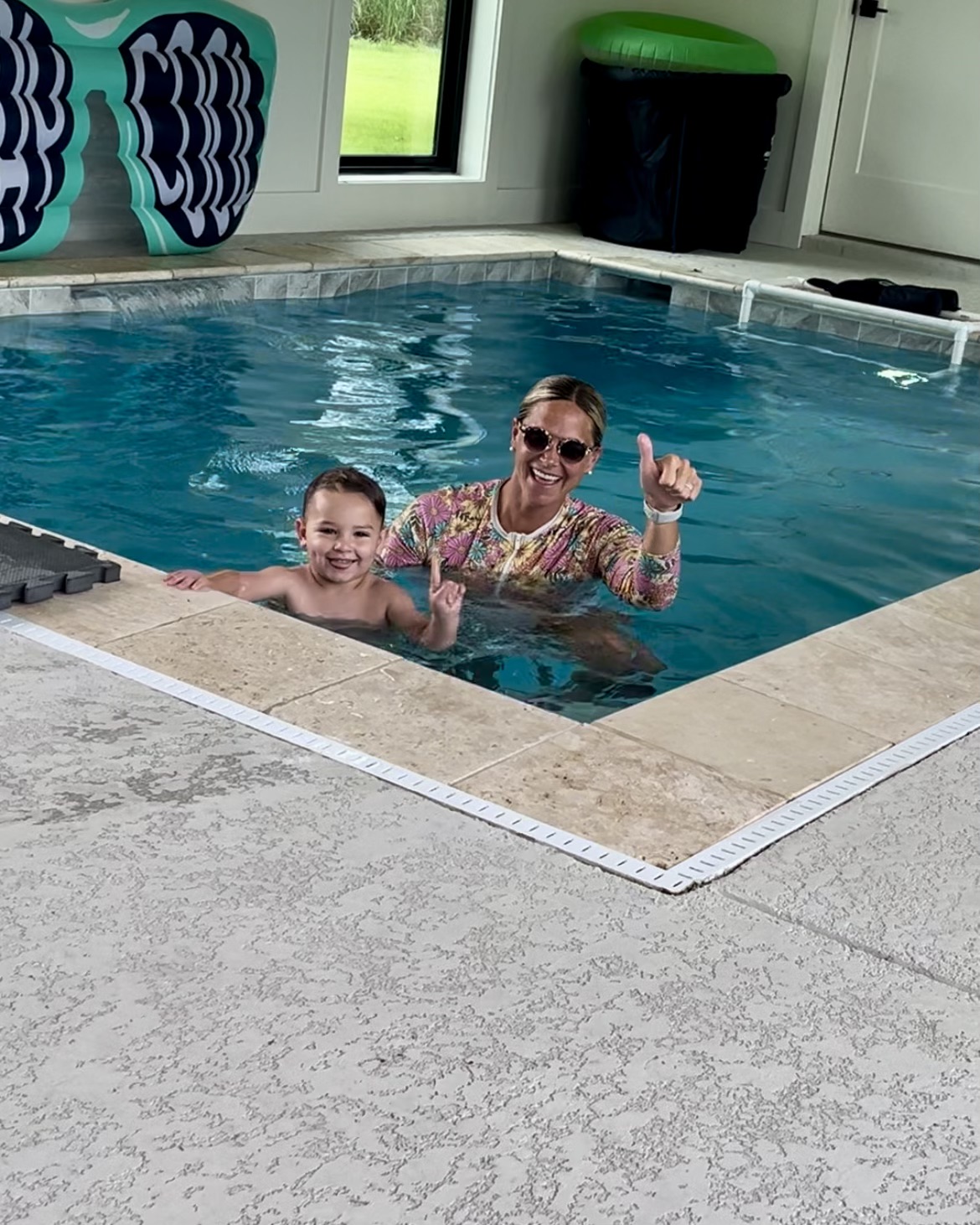
Swim Instructor Image
FAQs
Do parents need to get in the water?
Parents don’t typically need to be in the water. However, I recommend parents of swim float swim students joining a lesson or two toward the end of the session to learn how to support your child’s skills during water play.
Will my child forget skills if they take lessons in Fall or Winter?
ISR Self-Rescue Skills are sensorimotor skills, much like walking or riding a bike—they don’t simply disappear, though they can get rusty without practice. I recommend refresher or maintenance lessons to keep skills sharp, especially as children grow. Learning in the "off-season" can prepare your child for water safety before summer.
Is dry drowning something to be concerned about in lessons?
Short answer: no. In September 2018, the American College of Emergency Physicians declared that terminology such as “dry drowning,” “wet drowning,” “near drowning,” “secondary drowning,” and “delayed drowning,” should no longer be used. There are three medically recognized types of drowning: (1) fatal, (2) nonfatal with injuries, and (3) nonfatal without injuries. Unfortunately, the outdated terms are continuously sensationalized and used by the media. Drowning does not happen days to a week after being in water. There are no medically accepted conditions known as ‘near-drowning,’ ‘dry drowning’ and ‘secondary drowning.' As for the concern about inhaling water during swimming: There are 2 tubes– esophagus which goes to the stomach and the trachea which goes to the lungs. If water is swallowed it goes to the stomach & is absorbed or peed out. The epiglottis naturally blocks water from going into the lungs. A child would have to be unconscious or the epiglottis would have to be jarred in some way for it not to function properly. If a child inhales some water while playing in the bath or gets dunked in the pool during water tag, there’s no need to worry.
Is there an ideal age to start ISR lessons?
Children as young as six months (who can sit upright independently) are eligible. Starting earlier ensures your child is safer sooner.
Download ISR's Family Aquatic Safety List to help protect your family from the hazards of an aquatic environment
Download Safety List

Get in Touch

Check out our programs and get started today!